Friday, November 4, 2011

THE WRECK; re-visited 15


      Annada Babu vented his feelings on his visitor, "You're too suspicious, Akshay ! When you have no proof    why should you--"

  Akshay had worn out his patience. "Look here, Annada Babu," he burst out, "you're imputing all sorts of vile motives to me ! You insinuate that I bear a grudge against your future son-in-law and that I'm suspecting an innocent man. I'm not clever enough to teach ladies philosophy, and I can't boast of any ability to  discuss poetry with them; but I've always been fond of and devoted to you and your family. Though I can't vie with Ramesh Babu in any other respect, I pride myself on never having had any thing to conceal from you. You'll know to-marrow what I mean." Akshay left out angrily.

     Night had fallen before Ramesh had dispatched all the letters informing the postponement of the marriage. That night appeared to him of having the eternal peace of the infinite on one hand, on the other the  eternal conflict of the world ! Now he beheld Love in-contact with the world trampled and tossed about in the press of life. Which was the true vision and which was illusion ?

  Jogendra returned from up-country by the morning train next day. It was Saturday, and Sunday was to be Hemamalini's wedding-day ;yet as he approached the house he observed none of the signs of festivity that he had anticipated. He dreaded to hear some untoward thing to have taken place. But as he hurried indoors there was no such thing he found. A meal was ready for him, and Annada Babu sat at the table reading the news paper.

  "Is Hem all right ?"exclaimed Jogendra as he entered the room.

   "She is quite well," replied Annada Babu. Then Jogendra extracted the reasons for the wedding to have postponed to the Sunday after next. Telling that it was postponed at the instance of Ramesh, Annada Babu said, "you had better ask your friend about that urgent business and that the wedding couldn't take place on Sunday."

    Jogendra inwardly cursed his father's supineness. "When I'm not here you people make an awful muddle of every thing, dad," he said. "What important business could he have ? He's his own master. He has no relations that count. If he has got into a mess over some business matter I don't see what there was to hinder him from telling you  all about it. Why did you let it rest at that ?"

    "After all, he hasn't run away ! You had better go and ask him yourself."

    Jogendra swallowed a cup of tea and dashed off. He rushed into the next house and stamped upstairs, but found no sign of Ramesh there. After hunting high and low he found the bearer only to be informed him that Ramesh had taken a supply of clothes with him and had said that he might not be back for four or five days ; but where he had gone is not told.

   Jogendra wore a preoccupied air as he resumed his seat at the break-fast table after reaching home. He vent out his suspicion of Ramesh saying: " Here's a man who is about to marry your daughter, and you take no interest in his actions and his movements ; and that though he lives next door !

   In the face of this tirade Annada Babu was obliged to grapple with the situation.

   "What's the meaning of it all, then ?" he asked, assuming the expression of gravity that the occasion seemed to demand.

  Knowing that Hemamalini had her tea earlier and gone upstairs without even facing Jogendra , he supposed that she's thoroughly ashamed of Ramesh's extraordinary conduct and could not face him. He went upstairs to comfort his sister. When she heard Jogendra's step she hurriedly picked up a book and made a pretence  of reading it. She laid the book down as he entered and greeted him cheerfully :

  "Hullo, when did you come in ? You're not looking as well as you should be."

   "I've heard all about it, Hem. However don't you worry ; it's only because I wasn't here such a thing happened. I'll put things right again ! By the way, Hem, did Ramesh not give you any reasons ?" he asked showing his concern about the affair.   

Thursday, November 3, 2011

THE NATURAL STATE-Initial Life of U.G.K; Chapter 1.1


I was brought up in a very religious atmosphere. My grandfather was a very cultured man. He knew Blavatsky [the founder of the Theosophical Society] and Olcott, and then, later on, the second and third generations of Theosophists. They all visited our house. He was a great lawyer, a very rich man, a very cultured man and, very strangely, a very orthodox man. He was a sort of mixed-up kid: orthodoxy, tradition on one side and then the opposite, Theosophy and the whole thing on the other side. He failed to establish a balance. That was the beginning of my problem.


[U.G. was often told that his mother had said, just before she died, that he "was born to a destiny immeasurably high." His grandfather took this very seriously and gave up his law practice to devote himself to U.G.'s upbringing and education. His grandparents and their friends were convinced that he was a yoga bhrashta, one who had come within inches of enlightenment in his past life.]

He had learned men on his payroll and he dedicated himself for some reason—I don't want to go into the whole business—to create a profound atmosphere for me and to educate me in the right way, inspired by the Theosophists and the whole lot. And so, every morning those fellows would come and read the Upanishads, Panchadasi, Nyshkarmya Siddhi, the commentaries, the commentaries on commentaries, the whole lot, from four o'clock to six o'clock, and this little boy of five, six or seven years—I don't know—had to listen to all that crap. So much so that by the time I reached my seventh year I could repeat most of those things, the passages from the Panchadasi, Nyshkarmya Siddhi and this, that and the other.


So many holy men visited my house—the Ramakrishna Order and the others; you name it, and those fellows had somehow visited that house—that was an open house for every holy man. So, one thing I discovered when I was quite young was that they were all hypocrites: they said something, they believed something, and their lives were shallow, nothing. I lived in the midst of people who talked of these things everlastingly—everybody was false, I can tell you. So somehow, what you call existentialist nausea—revulsion against everything sacred and everything holy—crept into my system and threw everything out


That was the beginning of my search. I did everything, all the austerities. I was so young but I was determined to find out if there was any such thing as enlightenment. I wanted that very much. Otherwise, I wouldn't have given my life. Then my real search began. All my religious background was there in me. Then I started exploring. For some years I studied psychology and also philosophy, Eastern and Western, mysticism, all the modern sciences, everything. The whole area of human knowledge I started exploring on my own.

Before my forty-ninth year I had so many powers, so many experiences, but I didn't pay any attention to them. The moment I saw someone I could see their entire past, present and future without their telling me anything. I didn't use them. I was wondering, puzzled, you see, "Why do I have this power?" Sometimes I said things and they always happened. I couldn't figure out the mechanism of that. I tried to. They always happened. I didn't play with it. Then it had certain unpleasant consequences and created suffering for some people.

[U.G. was travelling all over the world, still lecturing. In 1955, leaving his daughters in India, he and his wife moved to the United States in search of treatment for his son Vasant's polio. By 1961 his money was finished, and he felt beginning within him a tremendous upheaval which he could not and did not wish to control, and which was to last six years and end with the 'calamity'. His marriage broke up. He put his wife and sons—a second, Kumar, had been born in Chicago—on a plane to India, and he went to London. He arrived penniless and began roaming the city. For three years he lived idly in the streets. His friends saw him as heading on a headlong course downhill, but he says that at the time his life seemed perfectly natural to him. Later, religious-minded people were to use the mystics' phrase 'the dark night of the soul' to describe those years, but in his view there was "no heroic struggle with temptation and worldliness, no soul-wrestling with urges, no poetic climaxes, but just a simple withering away of the will."]
   

THE WRECK; re-visited 14


          Annada Babu looked up anxiously as Ramesh re-entered the room. Ramesh requested Annada Babu to give him the list of guests invited for the marriage so that he could write them all about the change of date of the marriage and also assured that he could bear all the expenses for the marriage apart from  he himself  making the required arrangements. Annada Babu looked bit pacified . Having handed over the list of invitees to Ramesh, "Have you decided where to practise  after you're married, Ramesh ? Not in Calcutta, I suppose ?", he asked.

    "No, I want to find some suitable place up-country."
 
   "Up-country ? That's is a sound idea. Etawah isn't a bad place at all. The climate suits one's digestion very well. You see, lad, she's my only daughter, and we should never be happy apart. That's why I want you to choose a healthy place," he added.

   Ramesh having offended him, Annada Babu took the opportunity to press certain of his own somewhat exacting demands   . In his present frame of mind Ramesh would have readily agreed to migrate to Cherra Punjior the Garo Hills, or any such mist-drenched mountain-top, if Annada Babu had suggested it instead of Etawah.

      "Very good," he said, "I will join Etawah bar," and departed after undertaking to countermand the invitation.

      No sooner had he gone than Akshay appeared and learned that Ramesh had postponed his wedding for a week. Akshay  assumed an air of portentous gravity, and his mind began to work. At length he went on :

      "When you think you've found a good husband for Hemamalini you shut your eyes to all possibilities. Everything should be ascertained about the man a daughter is to be entrusted to for life. It appears that he has not given sufficient reason even for the postponement of marriage.After all, when a person clearly indicates that he does not want to give his reasons one can hardly question him further. If it had been anything that he could divulge, Ramesh would have told you of his own accord."

       Hemamalini flushed angrily. "I don't want to hear third parties' opinions on the subject. Personally, I am quite satisfied with things as they are," and she hurried out of the room they had assembled in.

      Akshay turned green, but he forced a smile. "That's the way of the world-try to do a friend a service and a scolding is your reward. I consider it my duty, as a good friend of Jogendra, to express my suspicions of Ramesh. I can't rest easy when I see any trouble threatening you. However,  Jogendra will be here to-marrow. If after he has heard the whole story,  he has no anxiety on his sister's account, then I won't say another word."

    Annada Babu fully realised that this was the psychological moment for asking Akshay what Ramesh's conduct really meant; but he who probes a mystery may let loose a whirlwind, and the old gentleman was constitutionally averse to such an operation.

Wednesday, November 2, 2011

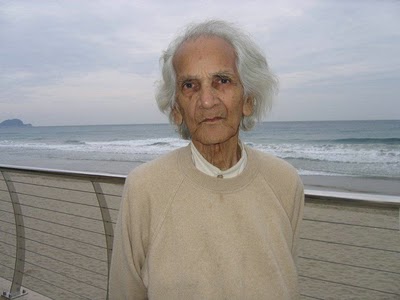
U.G.Krishnamurti; (July 9, 1918 – March 22, 2007)

               
                             Born : Machilipatnam, (A.P), India. Occupation: Philosopher.


       Although necessary for day to day functioning of the individual, in terms of the Ultimate Reality or Truth he rejected the very basis of thought and in doing so negated all systems of thought and knowledge in reference to It.


Philosophy

"I have no teaching. There is nothing to preserve. Teaching implies something that can be used to bring about change. Sorry, there is no teaching here, just disjointed, disconnected sentences. What is there is only your interpretation, nothing else. For this reason there is not now nor will there ever be any kind of copyright for whatever I am saying. I have no claims"
"I am forced by the nature of your listening to always negate the first statement with another statement. Then the second statement is negated by a third and so on. My aim is not some comfy dialectical thesis but the total negation of everything that can be expressed."
         U.G. emphasized the impossibility and non-necessity of any human change, radical or mundane. These assertions, he stated, cannot be considered as a "teaching", that is, something intended to be used to bring about a change. He insisted that the body and its actions are already perfect, and he considered attempts to change or mold the body as violations of the peace and the harmony that is already there. The psyche or self or mind, an entity which he denied as having any being, is composed of nothing but the "demand" to bring about change in the world, in itself, or in both. Furthermore, human self-consciousness  is not a thing, but a movement, one characterized by "perpetual malcontent" and a " fascist insistence" on its own importance and survival

       "Man is just a memory. You understand things around you by the help of the knowledge that was put in you. You perhaps need the artist to explain his modern art, but you don't need anybody's help to understand a flower. You can deal with anything, you can do anything if you do not waste your energy trying to achieve imaginary goals."


     "I am not anti-rational, just unrational. You may infer a rational meaning in what I say or do, but it is your doing, not mine."


Biography


Early life and India

He was born on July 9, 1918 in Machilipatnam, a town in coastal Andhra Pradesh, India, and raised in the nearby town of Gudivada. His mother died seven days after he was born, and he was brought up by his maternal grandfather, a wealthyBrahmin lawyer, who was also involved in the Theosophical Society.  U.G. also became a member of the Theosophical Society during his teenage years.
During the same period of his life, U.G. reportedly practiced all kinds of austerities and apparently sought moksha or spiritual enlightenment. To that end, between the ages of fourteen and twenty-one, he undertook all kinds of spiritual exercise, determined to find out whether moksha was possible. Wanting to achieve that state, he had also resolved to prove that if there were people who have thus "realized" themselves, they could not be hypocritical As part of this endeavor, he searched for a person who was an embodiment of such "realization".
He spent seven summers in the Himalayas with Swami Sivananda studying yoga and practicing meditation.  During his twenties, U.G. began attending the University of Madras,  studying psychology, philosophy, mysticism, and the sciences, but never completed a degree, having determined that the answers of the West – to what he considered were essential questions – were no better than those of the East

Calamity

 U.G. was pondering the question "How do I know I am in that state?" with no answer forthcoming. He later recounted that on suddenly realizing the question had no answer, there was an unexpected physical, as well as psychological, reaction. It seemed to him like "a sudden explosion inside, blasting, as it were, every cell, every nerve and every gland in my body." Afterwards, he started experiencing what he called "the calamity", a series of bizarre physiological transformations that took place over the course of a week, affecting each one of his senses, and finally resulting in a deathlike experience. He described it this way:
I call it calamity because from the point of view of one who thinks this is something fantastic, blissful and full of beatitude, love, or ecstasy, this is physical torture; this is a calamity from that point of view. Not a calamity to me but a calamity to those who have an image that something marvelous is going to happen. 
Upon the eighth day:
Then, on the eighth day I was sitting on the sofa and suddenly there was an outburst of tremendous energy – tremendous energy shaking the whole body, and along with the body, the sofa, the chalet and the whole universe, as it were – shaking, vibrating. You can't create that movement at all. It was sudden. Whether it was coming from outside or inside, from below or above, I don't know – I couldn't locate the spot; it was all over. It lasted for hours and hours. I couldn't bear it but there was nothing I could do to stop it; there was a total helplessness. This went on and on, day after day, day after day.
The energy that is operating there does not feel the limitations of the body; it is not interested; it has its own momentum. It is a very painful thing. It is not that ecstatic, blissful beatitude and all that rubbish – stuff and nonsense! – it is really a painful thing


Monday, October 31, 2011

SELF-CONSCIOSNESS and its effects

   
    Self-consciousness is an acute sense of self-awareness It is a preoccupation with oneself, as opposed to the philosophical state of self-awareness, which is the awareness that one exists as an individual being; although some writers use both terms interchangeably or synonymously.An unpleasant feeling of self-consciousness may occur when one realizes that one is being watched or observed, the feeling that "everyone is looking" at oneself. Some people are habitually more self-conscious than others. Unpleasant feelings of self-consciousness are sometimes associated with shyness or paranoia. Man can, through self-consciousness, make a choice between affirming or denying the will.

 Impairment
When feeling self-conscious, one becomes aware of even the smallest of one's own actions. Such awareness can impair one's ability to perform complex actions. Adolescence is believed to be a time of heightened self-consciousness. A person with a chronic tendency toward self-consciousness may be shy or introvert.

Psychology

Unlike self-awareness which in a philosophical context is being conscious of oneself as an individual, self-consciousness, being excessively conscious of one's appearance or manner, can be a problem at times. Self-consciousness is often associated with shyness and embarrassment, in which case a lack of pride and low self-esteem can result. In a positive context, self-consciousness may affect the development of identity, for it is during periods of high self-consciousness that people come the closest to knowing themselves objectively. Self-consciousness affects people in varying degrees, as some people are constantly self-monitoring or self-involved, while others are completely oblivious about themselves.
Psychologists  frequently distinguish between two kinds of self-consciousness, private and public. Private self-consciousness is a tendency to introspect and examine one's inner self and feelings. Public self-consciousness is an awareness of the self as it is viewed by others. This kind of self-consciousness can result in self-monitoring and social anxiety. Both private and public self-consciousness are viewed as personality traits that are relatively stable over time, but they are not correlated. Just because an individual is high on one dimension doesn't mean that he or she is high on the other.
Different levels of self-consciousness affect behavior, as it is common for people to act differently when they "lose themselves in a crowd". Being in a crowd, being in a dark room, or wearing a disguise creates anonymity and temporarily decrease self-consciousness  This can lead to uninhibited, sometimes destructive behavior.

Sunday, October 30, 2011

THE WRECK; re-visited 13


        Ramesh entered the large sitting-room  where Hemamalini was standing at the window silently gazing at the street outside. He hesitated to take his stand beside her and he paused on the threshold with his eyes on her motionless figure. She took no notice of her lover, but gazed the more intently at the panorama of the streets. His voice trembled as he broke the silence. "I must beg something of you."
     Hemamalini felt the pain that throbbed in his utterance and she turned towards him.
     "Do not loose faith in me !" he cried ; "I call heaven to witness that I will never cease to deserve your trust." Not another word could he utter, and a film of tears gathered over his eyes.
     Hemamalini looked up pityingly, and gazed steadfastly into his face ; then suddenly she melted, and the tears rolled down her cheeks. And so , as the lovers stood side by side in the seclusion of that window-bay, their eyes met. Though not a word spoken, a blissful peace descended on them both, and in rapture that it brought in its train they tasted heaven.
     With a deep sigh of relief Ramesh broke the stillness.  "Do you know why I suggested postponing our marriage for a week ?"he asked. Hemamalini shook her head. She did not want to know.
     "I will tell you the whole story after we're married," said Ramesh. The allusion to their marriage brought a faint blush to the girl's cheek.
     Early in the afternoon, imagining Ramesh's visit that evening, she had looked forward to much animated talk, confidential discussion of future plans, and lightly-sketched miniatures of the happiness that was to be theirs. She could never have imagined that in the space of a few hours they would exchange vows of constancy, that tears would be shed, that instead of conversing they would merely stand side by side, and she could not have conceived what full and complete peace of mind and implicit trust would be the sequel.
      " You must go to my father at once," said Hemamalini ; " he's quite vexed."
       Ramesh went off cheerfully, ready to bare his breast to any stab that the world might choose to inflict on him.   

Saturday, October 29, 2011

THE NATURAL STATE-In the words of U.G.Krishnamurti (Peter Maverick)


Introduction


Here is the end of seeking,
you who are weary of the road.

This compilation of quotes by U.G. Krishnamurti can alter your life. Someone once said to his daughter who had met U.G., "Damned be the day you met this man; your life will never be the same." Whether we feel cursed or blessed, our coming upon the unique life/energy that is U.G. can change our life forever.

This book, an anthology of U.G.'s conversations, taken from many sources, offers some of the most startling and penetrating of U.G.'s words in short, easy to read paragraphs. The selections link together various statements of U.G.'s in a way that creates a sense of cohesiveness. The overall effect of the book can stun the reader into a recognition of the futility of many of his deepest-held convictions about life. Even if one is familiar with U.G.'s way of seeing things, this book offers a comprehensive overview that provides a useful clarification. If you have newly discovered U.G. through this book, be prepared to experience something so unusual that it cannot be placed in any category of human thought.

Don't underestimate the power of his words. Here is an original thinker unlike anyone you've ever come across before. The hundred thousand books of cliched thoughts on spirituality, psychology and self-help available today offer you ways that are congenial to what you already know. U.G. merely offers to shatter what you know and not to replace it with anything, no new technique, or discipline or way. Are you ready to be shattered, to have your beliefs stripped away and then not be given anything new to hang on to? Then read this book. It's not a way beyond all the other ways. It's outside of ways altogether.

If you shock easily, this may not be for you. Yet there is love here too, though U.G. would never use the word love. A love that can take away everything you thought you were and leave a yearning for more of this strange alchemy that is U.G. So even if you do shock easily, this may be the very thing for you. U.G. is not a teacher in the usual sense of the word. He is perhaps more of a phenomenon of nature, something outside of what human beings have created. Something happened to him in his 49th year, an acausal release from the dominance of the thought structure that encases human beings. U.G. calls this state he is in "the natural state", and he functions with great clarity and efficiency in this state. Now in his 80's, U.G. travels around the world visiting friends and talking to people from all walks of life.

He does not give you anything to replace your current belief system. But if you see how penetrating his analysis of human belief is, you may be forced to drop many of your most cherished ideas about life. This can free you to some extent, and you may find your life becoming simpler not through any effort of yours but simply because you no longer have to carry the burden of so many belief structures. U.G. is not interested in converting you to a new religion or to any belief system whatsoever.

He expresses a unique point of view and tells you to take it or leave it. He is not trying to make you into a better person. In fact, he says that you don't need to change anything and that it is our tragedy that we are constantly trying to change ourselves. Who you are is completely unique, yet you are trying to model yourself after another, usually one of the "saints, sages, or saviors of mankind".

In the end, what you are left with after your encounter with U.G.—either through his words or his actual presence—is the feeling that something different has happened to you, but you can't quite say what it is. You feel that somehow your life has changed, but you don't know in what way. There is a kind of energy you feel underneath things, perhaps a slight burning in your heart—you've entered a world that you never knew existed and you will never be the same again. And you can't even say whether this is a curse or blessing, but you know you would never trade your encounter with U.G. for anything in this life—no matter what it cost you.

So if you have the guts to allow your whole way of seeing things to be changed, by all means read this book: life's own energy, freed from thought, is here.

Larry Morris
Albuquerque